Hey garden lovers! Ever think what really makes an irrigation system tick? I bet you’ve thought about it—how does all that water reach every corner of your garden so perfectly? You’re in the right place to find out! Whether you’re thinking about setting up a system for your garden or just curious, I’m here to break it all down. Honestly, irrigation might sound complicated, but it doesn’t have to be. And hey, i’ll take you through the basics, so you can understand how it all works, even if you’re not an expert.
Parts of an Irrigation System
An irrigation system has many parts that work together to bring water to your plants. Each part is important, and knowing what they are will help you maintain and fix the system if something goes wrong.
1. Water Source and Pump
The first thing every irrigation system needs is water. It could be from your local water supply, a well, or even a pond. Once you have the water source, you need a pump to create pressure. This is especially important for systems that cover large areas. The pump gets water flowing through the pipes to your garden. Pumps are like the heart of the system—keeping everything moving.
- According to a study by the International Water Management Institute (IWMI), over 70% of global freshwater use is for agriculture, and irrigation pumps are a big part of that. A reliable pump can make a huge difference in how well your system works. In the U.S., irrigation accounts for about 42% of all freshwater use (U.S. Geological Survey), and pumps play a crucial role in ensuring water gets where it needs to go.
When selecting a pump, you should consider factors such as the size of your garden, the distance of the water source, and the flow rate needed. A centrifugal pump is often used for larger gardens or farms, while a submersible pump might be best for wells.
2. Pipes and Tubing
Pipes and tubing carry the water to your plants. Larger pipes bring water to different zones, and smaller tubing takes it to specific plants. In a drip tape irrigation system parts, there are main lines and smaller lines, with drip tape being the tubing that delivers water directly to the roots. Choosing the right kind of pipe is important. PVC pipes are popular, but polyethylene is also used, especially for more flexible lines.
- A recent report from the Irrigation Association showed that 60% of irrigation system parts failures come from damaged or poorly maintained pipes and tubing. Regular checks are key to making sure water flows smoothly throughout your system. Damaged pipes can lead to water wastage and uneven distribution, which could mean some plants are left thirsty while others are overwatered.
3. Valves
Valves are like gatekeepers. They control the flow of water to different sections of the system. If you want to water certain areas at different times, these valves make it possible. Many systems have a main valve and separate zone valves to control different parts of your lawn or garden.
- It’s been found that modern irrigation system parts with smart valves save up to 30% more water compared to older, manual systems (U.S. Environmental Protection Agency, 2021). This means that upgrading your valves can both help save water and reduce your bills. Solenoid valves are often used in modern systems and are controlled by electric signals from the controller, allowing for automatic operation.
Manual valves are also available and are cheaper, but they require you to physically turn them on and off. This might be fine for a small garden, but if you want convenience and efficiency, an automated valve is better.
4. Sprinkler Heads and Drip Emitters
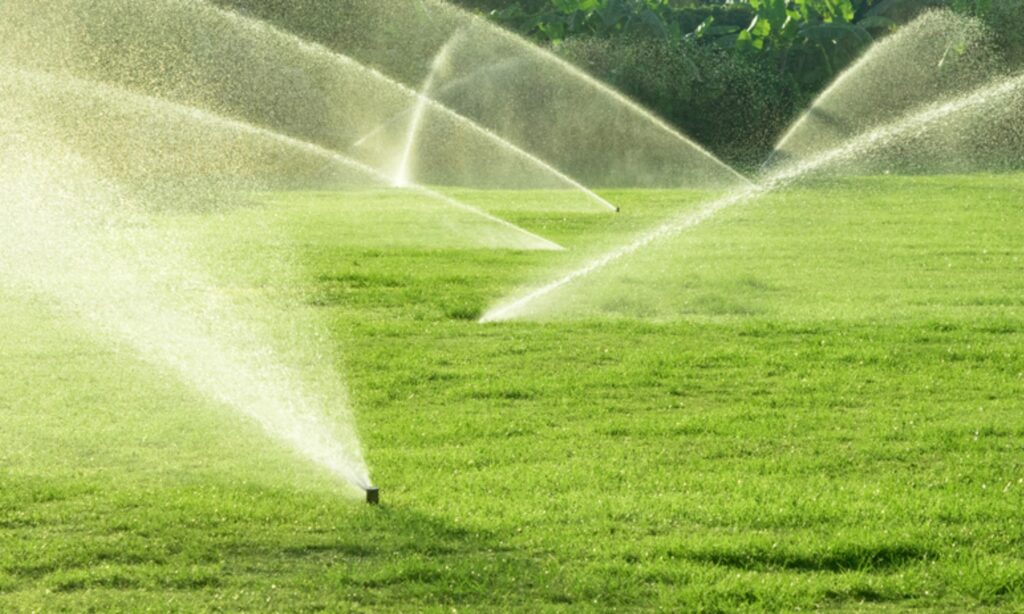
Sprinkler heads and drip emitters deliver water to your plants. Sprinkler heads are used in a parts of sprinkler irrigation system to spread water over a large area, making them great for lawns. Drip emitters are used in a drip irrigation system to provide slow, steady water right at the base of plants, which makes it efficient and saves water.
Sprinkler heads come in different types. Some are fixed and spray in a set pattern, while others rotate to cover more ground. Rotating heads, also known as rotors, are perfect for large areas because they can throw water much farther. For smaller areas, fixed or spray heads are often used.
Drip emitters come in different flow rates, so you can adjust them based on the plant’s needs. This precision is why experts often recommend drip systems for gardens and farms that need careful water use. Drip irrigation is especially beneficial in regions where water conservation is critical.
- According to the USDA, drip irrigation systems can reduce water use by up to 50% compared to traditional sprinkler systems. This makes them a great choice for those looking to conserve water and still keep plants healthy. Drip systems also reduce evaporation and runoff, which means more water reaches the plant roots.
5. Control System
Control systems, or controllers, are like the brains of an irrigation system. These are the tools you use to set schedules for when and how long to water. You can choose from simple manual timers to advanced smart controllers that connect to weather reports and adjust watering. Many people like smart controllers because they make life easier and help save water, which is good for both the environment and your wallet.
- Recent data from the Smart Water Application Technologies (SWAT) group shows that using a smart irrigation controller can save up to 20% on your annual water usage. With many states facing drought conditions, investing in a smart controller is a good move for both saving water and money.
Some advanced controllers have features like rain sensors, which stop watering during rainfall, and soil moisture sensors, which only water when needed. This kind of technology is becoming more common, with smart controllers now being used in both residential gardens and large-scale farms.
6. Filters and Pressure Regulators
Filters and pressure regulators are important, especially in drip systems. Filters keep dirt and particles out of the water, which could clog the emitters. Pressure regulators keep the pressure stable so that it doesn’t damage the parts, since drip emitters work best with low pressure.
- The University of California Agriculture and Natural Resources department recommends cleaning filters every month during peak irrigation times to ensure proper function. Clogged filters are one of the most common reasons for system breakdowns.
- Pressure regulators are key in preventing damage to your system. Most drip irrigation system parts work best at a lower pressure, around 20-30 PSI (pounds per square inch). If the pressure is too high, it can damage emitters or cause leaks in the tubing. Using a regulator ensures that the system remains safe and efficient.
How Sprinkler and Drip Systems Differ
Both sprinkler and drip systems have their uses, but they work differently based on the kind of landscape you have. Sprinkler systems are good for covering lawns and areas with lots of plants that need the same amount of water. Drip systems are more precise, delivering water directly to the roots. This is why experts often recommend using both—sprinklers for grass and drip for shrubs and flower beds.
- The Food and Agriculture Organization (FAO) states that drip irrigation systems can improve water efficiency by up to 95%. This makes it especially useful in areas where water conservation is crucial. Sprinkler systems are ideal for lawns and larger areas with uniform plant coverage, but they tend to lose more water through evaporation and wind drift compared to drip systems.
In places like California, where water restrictions are often in place, many homeowners are switching to drip irrigation for their gardens. The precision of a drip system also helps reduce weed growth since water is only delivered to the plant roots rather than across the entire surface.
Sprinkler systems, on the other hand, are better for landscapes that need even watering over a larger area. For example, parks and sports fields use sprinklers to keep the grass healthy. However, efficiency drops when sprinklers are used on windy days, as the water may be blown away from the intended area.
Why Knowing Irrigation System Parts is Useful
You might wonder—why does it matter to know these irrigation system parts? Understanding how your irrigation system parts works helps you fix small issues yourself. Many times, a simple problem like a clogged emitter or broken sprinkler head can be fixed without calling an expert. It also helps when choosing the right parts if you want to upgrade your system or change your layout.
- The American Society of Landscape Architects found that property owners who understand their irrigation systems save an average of 15% on maintenance costs every year. This knowledge helps you make smarter choices and save money in the long run.
If you know the parts of your system, you can also avoid common mistakes. For example, using the wrong type of pipe for a high-pressure zone can cause leaks or even damage the pump. Similarly, understanding how valves work allows you to set up proper watering schedules, making sure every plant gets the right amount of water.
- For those with larger properties, such as farms or estates, understanding the different parts of an irrigation system can lead to significant savings. Installing a filter system that matches the water quality in your area can reduce clogging issues. A study by the University of Florida shows that farms using well-maintained drip systems saw a 20% increase in crop yield compared to those without proper maintenance.
Tips from Irrigation Experts
- Check your valves regularly. Valves can wear out, especially if your water is a bit hard or has a lot of minerals. Mineral buildup can prevent valves from fully opening or closing, which affects water flow.
- Clean filters often to avoid clogging. This small step can save you a lot of trouble later. A clogged filter can reduce water flow and even lead to emitter failure, causing parts of your garden to go without water.
- Try smart controllers if you haven’t yet. They make watering easier and adjust to weather changes. Smart controllers can connect to your phone, letting you control your system from anywhere. This is great if you travel a lot or have unpredictable weather.
- Inspect sprinkler heads. Sprinkler heads can sometimes get misaligned or blocked by dirt. Make sure they are properly adjusted to avoid wasting water.
- Use mulch around plants. Mulch helps reduce evaporation, keeping the soil moist longer. This means you can water less often, saving time and water.
Bringing it All Together
Whether it’s drip tape or sprinkler heads, each irrigation system parts help to keep your garden healthy. Knowing about the different parts—from pumps to controllers—means you can better handle your garden’s watering needs. It can also save you time and money when maintaining or fixing your system.
A well-designed irrigation system can help you grow healthier plants while using less water. For example, a combination of sprinklers and drip irrigation is often the best approach for large gardens. Sprinklers can cover large grassy areas, while drip irrigation can efficiently water shrubs, flowers, and vegetable beds.
Remember that irrigation is not just about providing water; it’s also about providing the right amount of water at the right time. Too much water can be just as harmful as too little. By using smart controllers and setting up proper zones with valves, you can make sure that each part of your garden gets exactly what it needs.
If you want to learn more about irrigation systems or need help choosing the right parts, reach out to local irrigation experts—they’re always ready to help with their knowledge and experience. Whether you’re a homeowner or a farmer, understanding your irrigation system can make all the difference in keeping your plants thriving and conserving water.
Efficient irrigation saves water and contributes to a more sustainable environment. As we face climate challenges and water scarcity, every drop counts. Investing time in learning about your irrigation system can bring benefits for both your garden and the planet.